Jazz piano left hand voicings let you support harmony with compact four-note shapes while leaving the right hand free for melody or improvisation. A useful beginner system starts with the 3rd and 7th, adds the 9th or 13th when available, and organizes the notes into two inversions.
This guide applies those shapes to the seven diatonic seventh chords of a major key and shows how to practice them for smooth movement and easy transposition.
Review the Diatonic Tension Pattern
Use this beginner extension pattern for the seventh chords of a major key:
Imaj7(9) - iim7(9) - iiim7 - IVmaj7(9) - V7(9,13) - vim7(9) - viim7b5
The chords fall into three groups:
- No natural 9th in this diatonic exercise: iiim7 and viim7b5.
- Add the 9th: Imaj7, iim7, IVmaj7, and vim7.
- Add the 9th and 13th: V7.
This is a practice template rather than a complete list of every available jazz color. It gives you a consistent set of shapes before you begin making more context-dependent choices.
Type A and Type B Shapes
This article calls a four-note shape beginning with the 3rd Type A and one beginning with the 7th Type B. Other teachers may use A/B labels differently, so always check the actual interval formula.
For a basic seventh chord without added tensions:
- Type A: 3-5-7-1
- Type B: 7-1-3-5
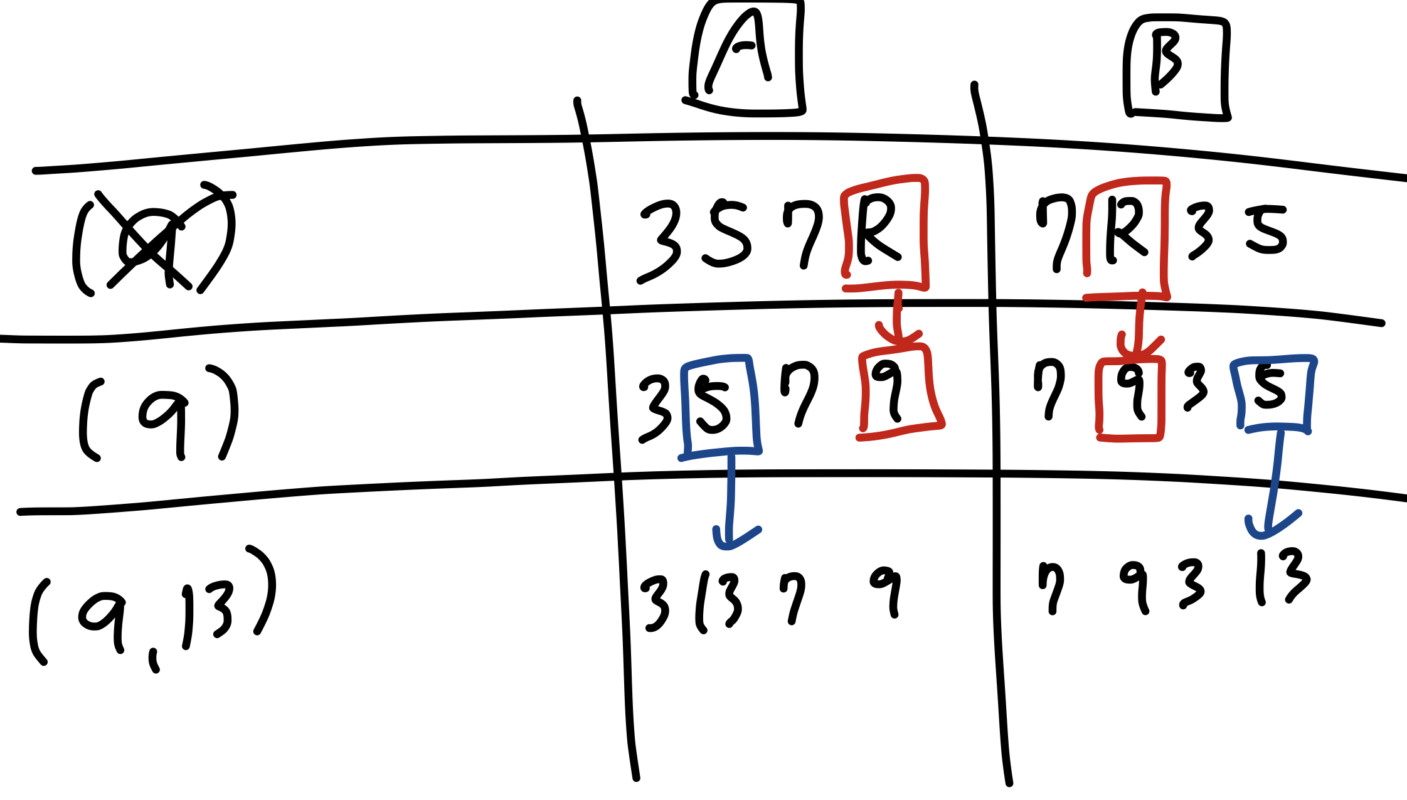
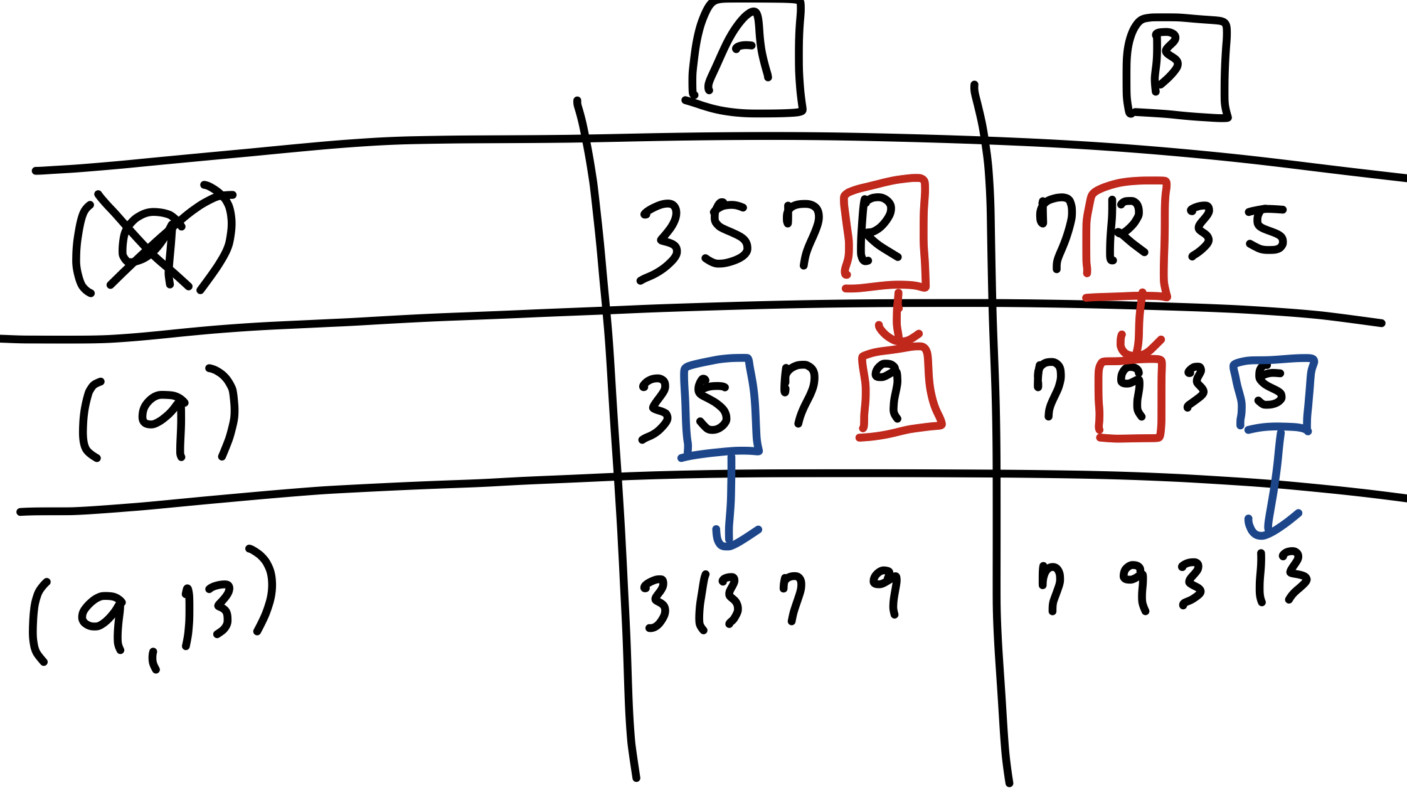
For a seventh chord with a 9th, replace the root with the 9th:
- Type A: 3-5-7-9
- Type B: 7-9-3-5
For a dominant seventh chord with both 9th and 13th, replace the root with the 9th and the 5th with the 13th:
- Type A: 3-13-7-9
- Type B: 7-9-3-13
Why Rootless Voicings Work
When a bass player supplies the root, the pianist can use the left hand for the notes that define chord quality and color. The 3rd and 7th remain in every tension shape, while the 9th and 13th replace less essential notes.
For Cmaj7(9), a Type A rootless shape is E-G-B-D, or 3-5-7-9. A Type B shape is B-D-E-G, or 7-9-3-5.
For G7(9,13), Type A is B-E-F-A, or 3-13-b7-9. Type B is F-A-B-E, or b7-9-3-13. The interval formulas use “7” as shorthand for the chord’s seventh; on a dominant chord, that note is a minor seventh above the root.
How to Convert a Seventh Chord into a Tension Voicing
Start with the inversion formulas 3-5-7-1 and 7-1-3-5. Then make two simple substitutions:
- Move the root up a whole step to create the natural 9th.
- Move the 5th up a whole step to create the natural 13th.
That turns 3-5-7-1 into 3-5-7-9, and 7-1-3-5 into 7-9-3-5. On V7, replacing both root and 5th produces 3-13-7-9 or 7-9-3-13.
Apply the Shapes to All Seven Diatonic Chords
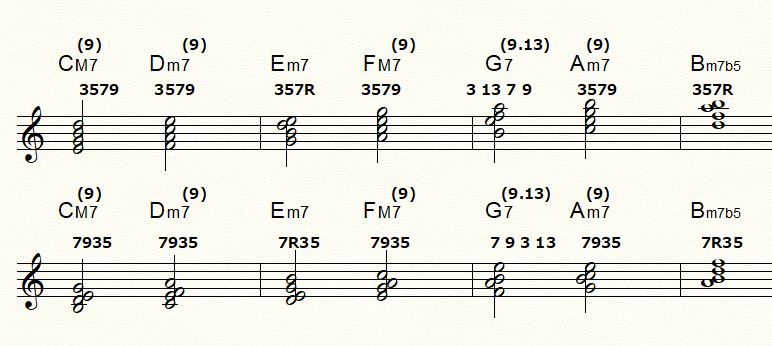
Practice every chord first in Type A:
- Imaj7(9): 3-5-7-9
- iim7(9): 3-5-7-9
- iiim7: 3-5-7-1
- IVmaj7(9): 3-5-7-9
- V7(9,13): 3-13-7-9
- vim7(9): 3-5-7-9
- viim7b5: 3-b5-b7-1
Then practice every chord in Type B:
- Imaj7(9): 7-9-3-5
- iim7(9): 7-9-3-5
- iiim7: 7-1-3-5
- IVmaj7(9): 7-9-3-5
- V7(9,13): 7-9-3-13
- vim7(9): 7-9-3-5
- viim7b5: b7-1-b3-b5
Use Voice Leading, Not One Shape for Every Chord
Playing every chord as Type A is useful for learning the formulas, but a real progression sounds smoother when you alternate shapes to minimize movement. Compare the notes in the current chord with the notes in the next chord, keep common tones, and move the remaining voices by the smallest practical interval.
In a ii-V-I progression, one shape often leads naturally to the opposite shape. The exact selection depends on register, but the principle is always the same: avoid unnecessary jumps.
Keep the voicings in the middle range of the piano. Four close notes played too low can become muddy, while the same shape an octave higher can sound clear and balanced.
Transposition Practice
- Learn the seven chords in C major.
- Repeat them in F, B-flat, and E-flat major.
- Say each interval formula aloud before playing it.
- Practice Type A and Type B separately.
- Alternate the types for smooth voice leading.
- Continue through all twelve keys when the first four feel comfortable.
Jazzify can help you repeat these chord shapes in progressions and connect left-hand voicing formulas to rhythm and improvisation practice.
Summary
- Type A begins with the 3rd; Type B begins with the 7th.
- Replace the root with the 9th to create a common rootless tension voicing.
- On V7, replace the 5th with the 13th as well.
- Keep the 3rd and 7th because they define chord quality and function.
- Practice each type separately, then alternate them for smoother voice leading.
- Transpose the shapes from C to F, B-flat, E-flat, and eventually all twelve keys.
Play the Jazzify demo right now
Connect a MIDI keyboard and play this interactive demo in your browser.
On iPhone and iPad, browsers cannot use a MIDI keyboard. Please use the Jazzify app instead.