Block chords turn a single-note melody into a full, rhythmic piano texture. In the classic locked-hands approach, the melody stays on top, the inner voices move with it, and the melody is often doubled an octave below. This lesson develops that sound with chord inversions, passing diminished chords, bebop scales, and Drop 2 voicings.

What Are Jazz Piano Block Chords?
A block-chord line harmonizes each melody note with a chord underneath it. The notes move in the same rhythm, creating the sound of a compact horn section at the piano. A practical starting point is a four-note close-position chord in the right hand with the melody doubled by the left hand.

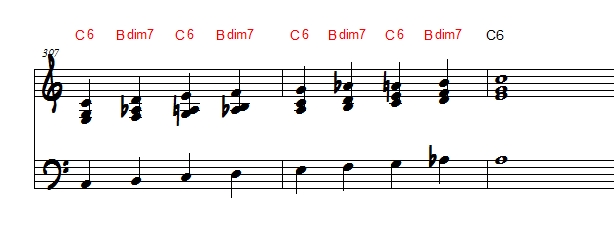
How to Harmonize a Melody
Begin by identifying the chord under each melody note. If the melody is a chord tone, place an inversion of the current chord beneath it. Keep the melody on top and choose the inversion that gives smooth inner-voice motion.
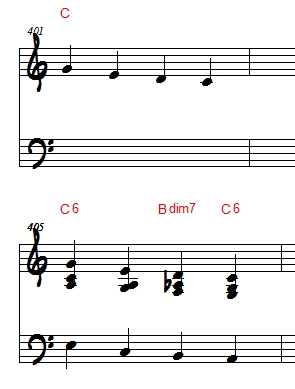
When the third is on top
If the melody is the third of the chord, invert the voicing so the third is the highest note. Avoid unnecessary leaps in the inner parts; the line should feel like one connected gesture rather than a sequence of unrelated grips.
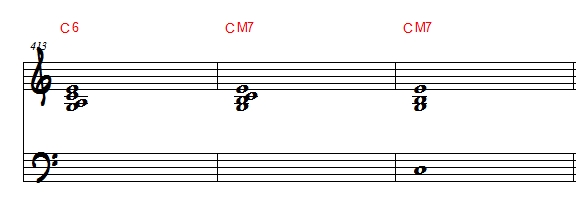
When the fifth is on top
The same process works when the fifth is the melody note. Move the chord tones below it into the nearest available inversion, then check that each voice travels by step or a small interval whenever possible.
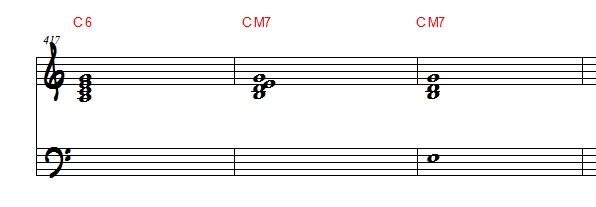
A Common Melody Pattern
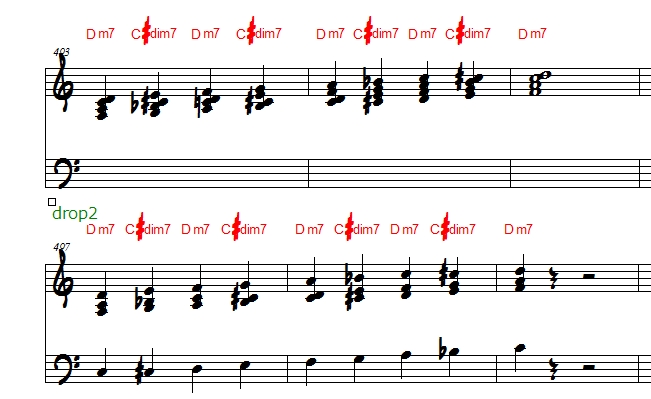
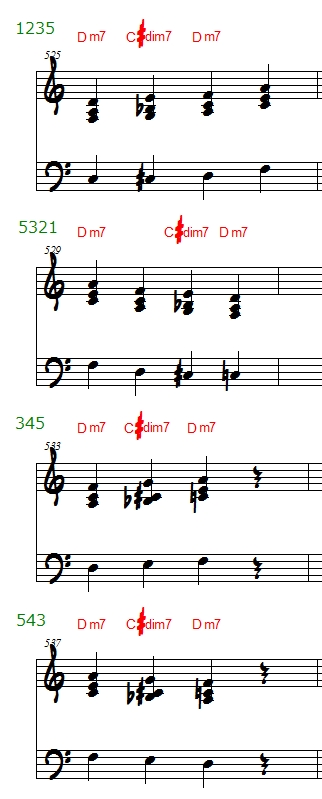
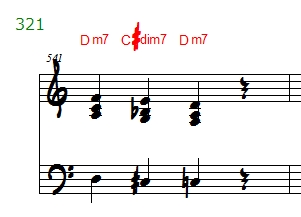
Jazz melodies frequently move between chord tones and scale tones. Harmonizing every note with the same chord quality can sound stiff. A more idiomatic solution alternates the main chord with a passing diminished chord, especially when the melody moves through a bebop scale.
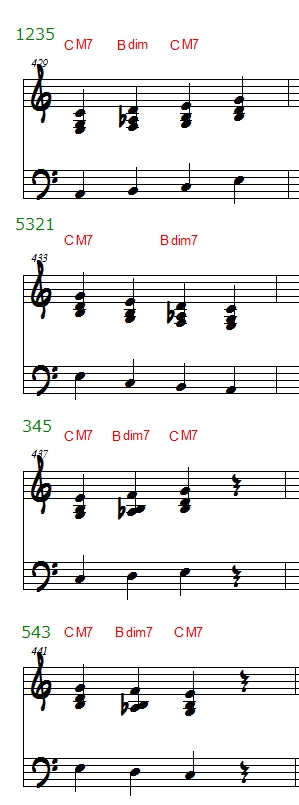
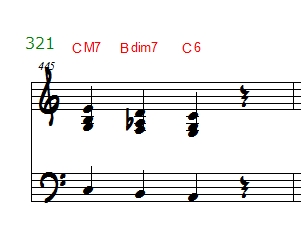
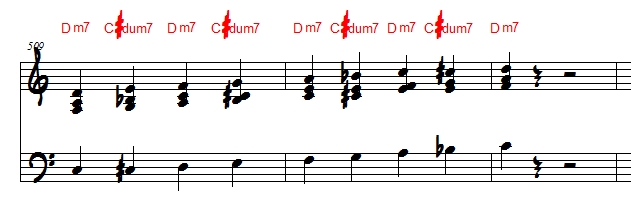
Applying Block Chords to “There Will Never Be Another You”
Standards are the best place to test the method. First play the melody alone, then identify chord tones, tensions, and chromatic passing notes. Add harmony only after the melodic shape and phrasing feel secure.
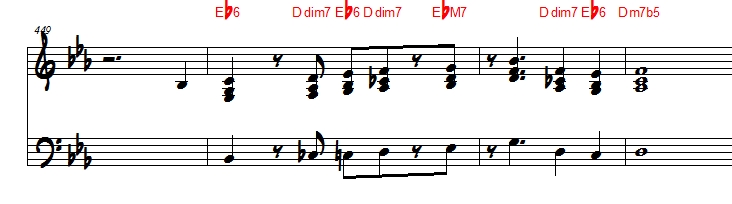
Measure 9
At a new phrase, reset the voicing around the current melody note instead of forcing the previous hand shape to continue. The harmonic rhythm and voice leading should support the phrase boundary.
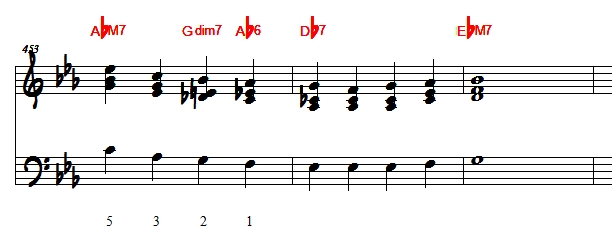
When #4 is the melody
A #4 melody note often works as a tension or chromatic connection. Do not automatically force it into the basic seventh chord. Test a diminished passing chord or another scale-derived voicing that keeps the melody intact.
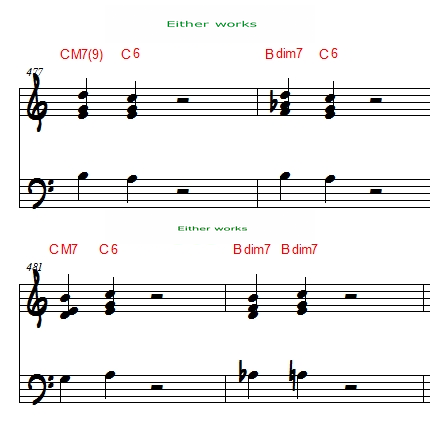
The seventh and ninth can be lead notes
The seventh and ninth are stable enough to use as the top note of a block voicing. The two notated solutions below are both valid; choose the one that gives the smoothest line and best register.
Minor Seventh Block Chords
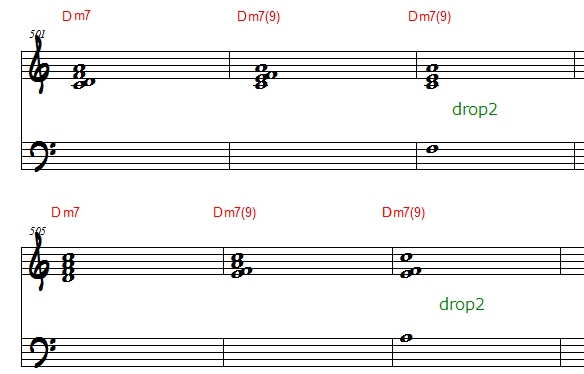
For a minor seventh chord, start with inversions of m7 and related color tones. Keep the characteristic minor third and seventh clear, then use nearby scale notes to connect melody tones.
Refining the Voicing with Drop 2
Four-way close voicings can become dense in the middle register. To create a Drop 2 voicing, take the second note from the top and move it down one octave. The melody and chord identity stay the same, but the voicing becomes more open and often easier to balance.
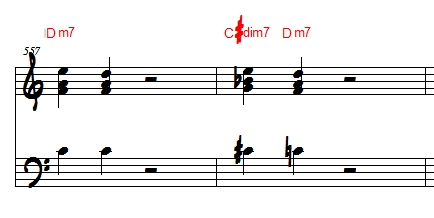
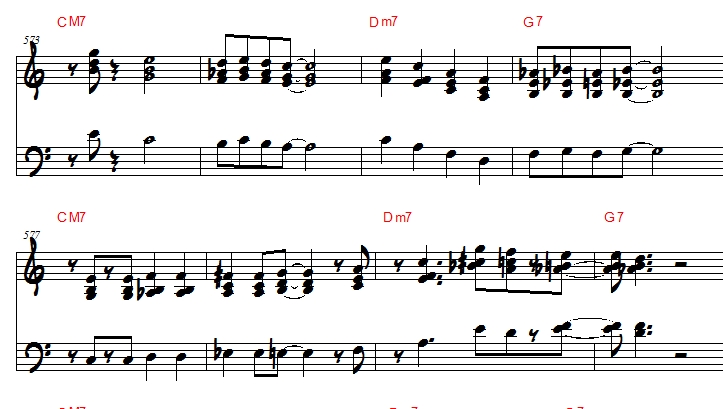
Song Examples
Listen for melody balance, smooth inner voices, and a steady rhythmic attack. These examples show how the technique changes with tempo, register, and harmonic rhythm.
Minor 6 and Passing Diminished Chords
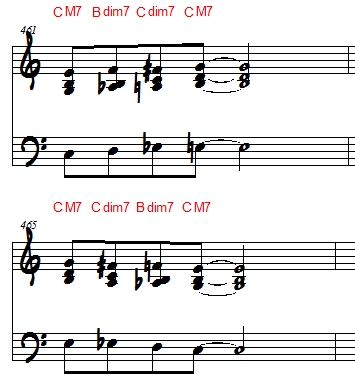
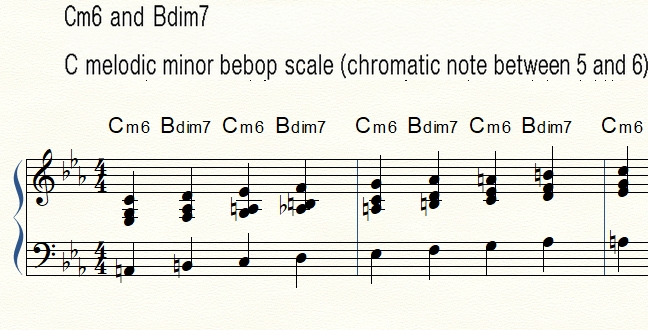
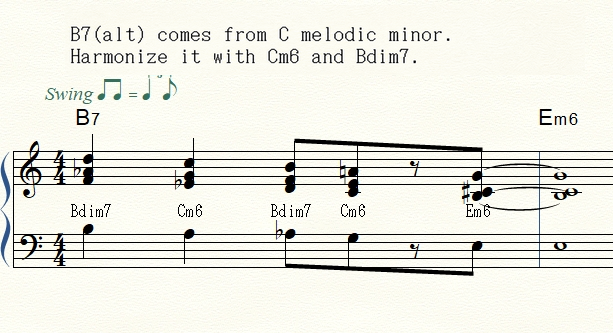
For a C minor sound, alternate Cm6 and Bdim7. Their notes interlock naturally, producing a smooth eight-note harmonized line when applied to the C melodic minor bebop scale. The added chromatic note lies between scale degrees 5 and 6.
Minor 7 Flat 5 from Minor 6
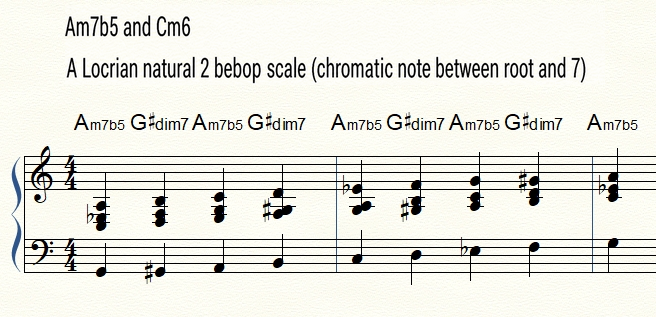
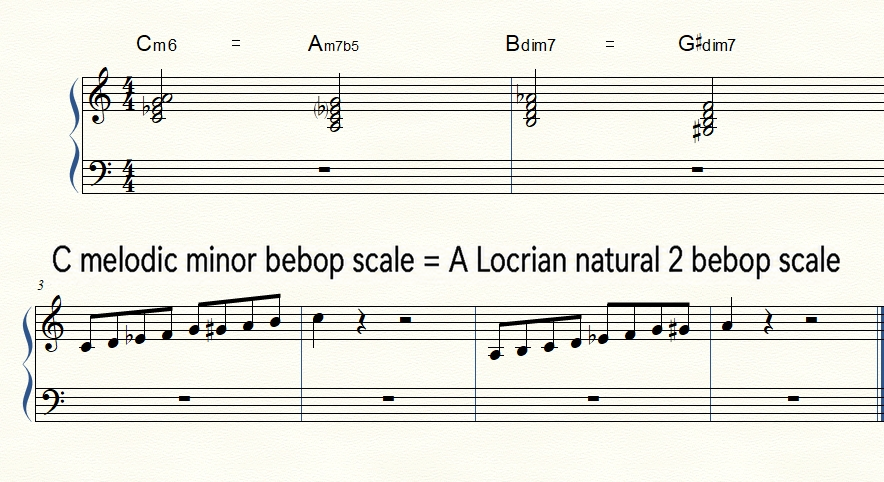
Am7b5 and Cm6 contain the same four notes: A, C, E-flat, and G. This lets the same voicing system harmonize an A Locrian natural 2 bebop scale. Add the chromatic passing note between the root and the seventh to create the eight-note line.
Melodic Minor Modes and Altered Dominants
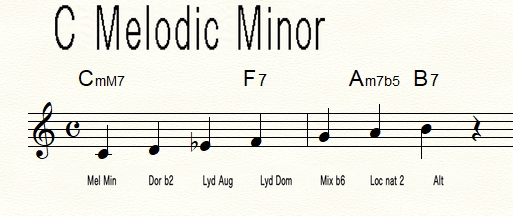
C melodic minor, A Locrian natural 2, B altered, and F Lydian dominant are modes of the same parent scale. That connection lets Cm6 and Bdim7 voicings supply harmonies for a B altered line.
Practice Checklist
- Keep the melody clearly above the inner voices.
- Use chord inversions when the melody is a chord tone.
- Use passing diminished chords for connecting scale and chromatic notes.
- Practice bebop-scale harmonization slowly in all keys.
- Convert close voicings to Drop 2 when the middle register sounds crowded.
- Apply the technique to two or four measures of a standard before attempting a full chorus.
Practice tip: Play the melody alone, then the inner voices alone, and finally the complete block-chord texture. This makes balance and voice-leading problems much easier to hear.
Play the Jazzify demo right now
Connect a MIDI keyboard and play this interactive demo in your browser.
On iPhone and iPad, browsers cannot use a MIDI keyboard. Please use the Jazzify app instead.