Online jazz piano lessons cost anywhere from $0 to $120 per hour depending on format, instructor credentials, and how much feedback you need. The cheapest option is not always the best value — and the most expensive weekly lesson is wasted if you do not practice between sessions.
This 2026 price guide compares every major online format, shows what you get at each price tier, and helps you allocate a realistic monthly budget based on your level and goals.
Price Overview by Format
| Format | Typical cost | Billing model | Feedback |
|---|---|---|---|
| Live private teacher (online) | $40–$120/hour | Per session | Immediate, personalized |
| Group class / masterclass | $15–$50/hour equivalent | Per program or monthly | Delayed, shared attention |
| Pre-recorded video course | $50–$300 total | One-time or subscription | None (unless community add-on) |
| Interactive practice app | $0–$30/month | Monthly or annual | Instant (automated) |
| Free YouTube / blog content | $0 | Free | None |
Most serious students spend $30–$80 per month on a combination of two formats rather than relying on one.
Live Private Online Lessons
A one-on-one online teacher is the most expensive per-hour option and the most valuable when you need correction on time feel, voicing choices, and phrasing.
What affects the price
- Instructor credentials — working gigging musicians and conservatory faculty charge more than student teachers.
- Specialization — teachers known for bebop, solo piano, or classical crossover command premium rates.
- Platform fees — marketplaces (TakeLessons, Lessonface) add 10–20% on top of the teacher's rate.
- Lesson length — 45- and 60-minute sessions are standard; 30-minute sessions cost less but allow less repertoire work.
Typical monthly cost
One 45-minute lesson per week at $60/hour ≈ $180/month. Two lessons per week ≈ $360/month. Many students reduce to biweekly ($90/month) once they have a solid practice routine.
Group Classes and Cohort Programs
Cohort-based programs — a fixed group studying the same material over 4–12 weeks — typically cost $150–$600 per program. That breaks down to $15–$50 per instructional hour depending on group size and instructor involvement.
Advantages: lower per-hour cost, peer motivation, structured deadlines. Disadvantages: less individual attention, fixed schedule, material may not match your exact level.
Pre-Recorded Video Courses
One-time purchases range from $50 for short focused courses to $300 for comprehensive multi-month libraries. Subscription platforms (some Patreon-style jazz educators) run $15–$40/month for ongoing content drops.
Calculate value by asking: how many hours of guided practice exercises are included? A 40-hour video library with zero exercises is less useful than a 10-hour course with daily assignments. Our guide to the best online jazz piano course covers curriculum evaluation in detail.
Interactive Practice Apps
Jazz-focused apps with MIDI input typically offer:
- Free tier — limited daily exercises, first curriculum chapters, or ad-supported content.
- Premium tier — $10–$30/month or $80–$200/year for full curriculum, unlimited practice, and ear training.
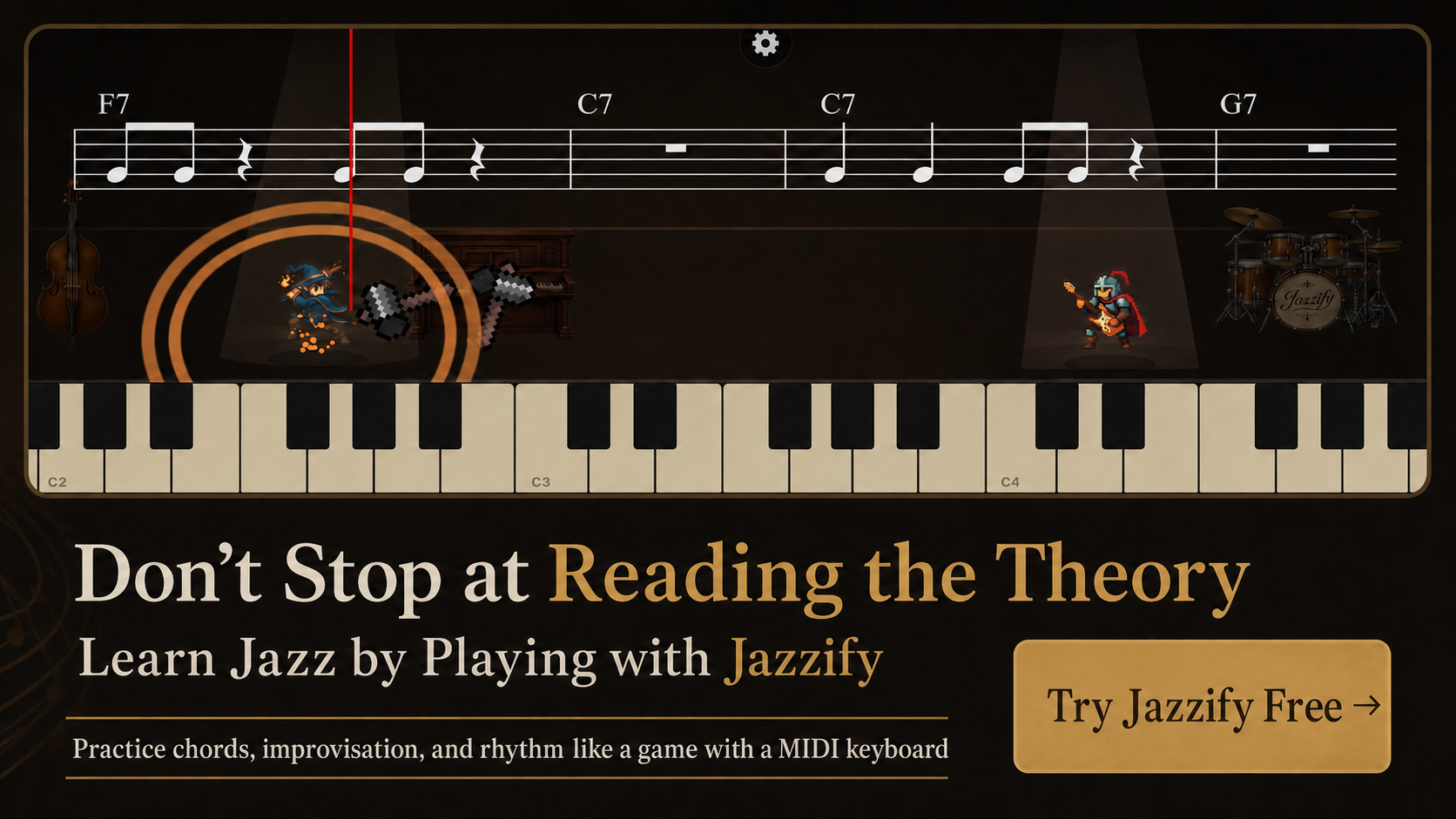
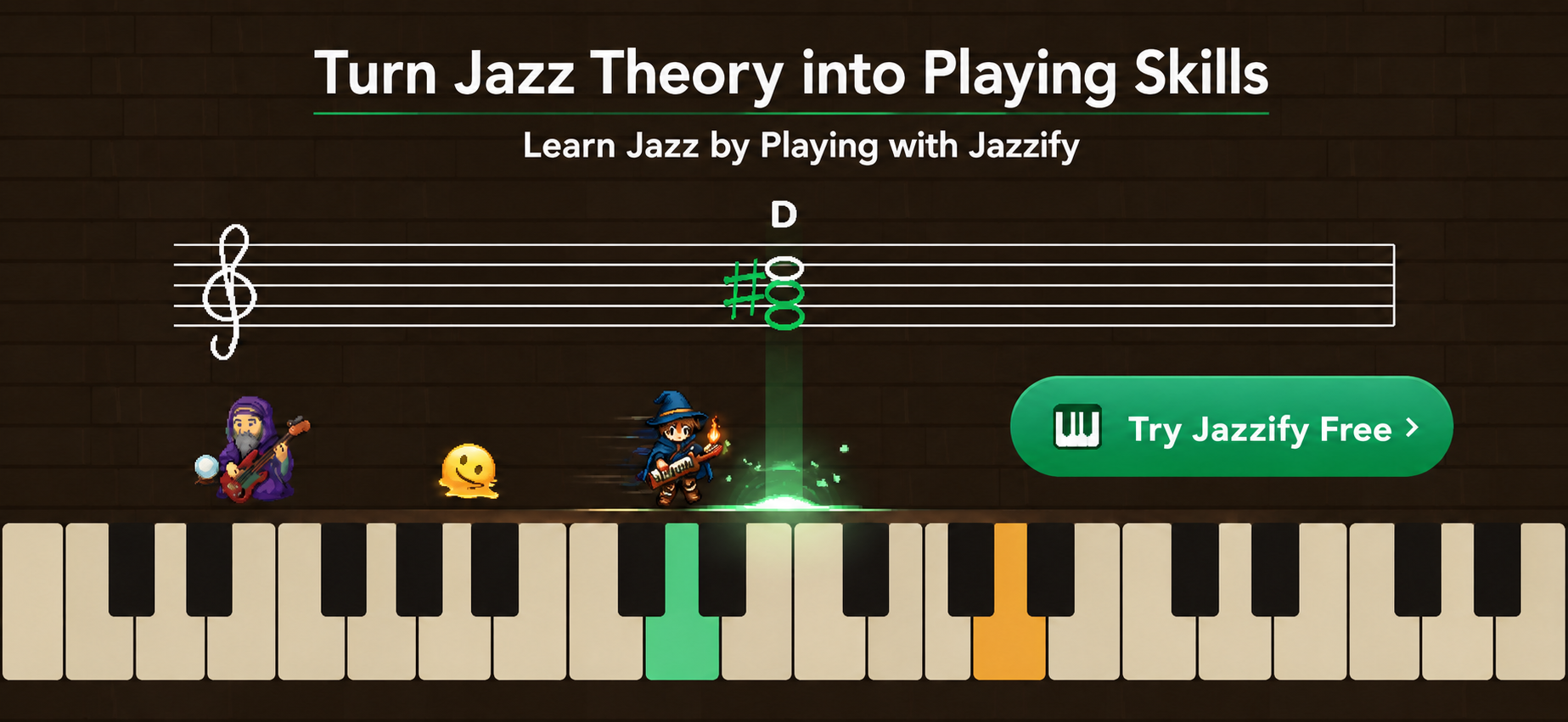
Jazzify follows this model: browser-based guided quests with MIDI keyboard feedback, free introductory content, and a premium tier for the full quest line including harmony, improvisation, and ear training.
At $15–$25/month, an app costs less than a single private lesson while providing daily feedback. It does not replace a teacher's comments on musicality, but it fills the six days between weekly lessons. Compare tools in best apps for jazz practice.
Free Content: YouTube and Blogs
Free content is genuinely useful for specific topics — a ii-V-I explanation, a voicing demonstration, a transcription walkthrough. It costs nothing but provides no feedback, no curriculum order, and no accountability.
Our guide on free jazz piano lessons online explains what free resources cover well and where they leave gaps.
Budget Templates by Goal
Tight budget ($0–$20/month)
Free YouTube + free app tier + library lead sheets. Add a metronome app and iReal Pro ($22 one-time) for backing tracks. Best for self-motivated beginners who can structure their own practice.
Moderate budget ($30–$60/month)
Premium practice app ($15–$25) + one biweekly private lesson ($30–$40 per session amortized). Covers daily feedback plus monthly human coaching. The most common sweet spot for hobbyists.
Serious study ($100–$250/month)
Weekly private lessons ($60–$120 each) + practice app for daily drills. Optionally add a video course for structured theory between lesson topics.
Career-track ($300+/month)
Multiple weekly lessons, cohort programs, transcription coaching, and ensemble participation. At this level, cost is less about finding the cheapest option and more about finding the right mentors.
Hidden Costs to Budget For
- MIDI keyboard — $100–$500 depending on key count and action (see best MIDI keyboard for jazz piano).
- Sustain pedal — $15–$30 if not included with the keyboard.
- Headphones — $30–$80 for quiet practice.
- Lead sheets and Real Books — $25–$50 for legal editions.
- Backing track apps — iReal Pro $22 one-time; other options vary.
- Recording setup — built-in phone mic is free; a USB mic ($50–$100) helps lesson review.
Teacher vs. App: Where to Spend First
If you can afford only one paid resource, the choice depends on your weakest area:
- No idea what to practice → start with a structured app or video course.
- Practicing daily but not improving → add a monthly teacher session for diagnosis.
- Understand theory but cannot execute → app for daily repetition.
- Can execute but sound mechanical → teacher for phrasing and time feel.
Read the full comparison in jazz piano teacher vs. app.
Regional Price Differences
Lesson rates vary by country and city. A teacher in New York or London may charge $100+/hour; a qualified teacher in a smaller market may charge $30–$50. Online lessons remove geography from the equation — you can study with a teacher in another time zone at local rates.
App subscriptions often display prices in USD, EUR, or JPY depending on your app store region. Annual plans typically save 20–40% compared to monthly billing. Check whether the app offers a trial period before committing to a year.
Getting the Most Value From Any Price Tier
- Practice daily — a $60 lesson with zero practice between sessions is $60 wasted.
- Record yourself weekly — free, and reveals problems no amount of passive watching fixes.
- Learn one standard per month — repertoire application is where theory pays off.
- Combine formats — app for weekdays, teacher for monthly check-ins.
- Cancel what you do not use — an unused subscription and an unused lesson slot both cost the same.
When to Invest More After Starting Cheap
Many students begin with free content and a $15/month app. Re-evaluate spending after three months:
- If you practice daily and pass app quests consistently, a biweekly teacher session ($120/month amortized) accelerates musicality.
- If you rarely open the app, fix your practice habit before adding expense.
- If you gig or jam, invest in a Real Book, better headphones, and possibly weekly lessons.
Spending more does not substitute for daily practice — it amplifies what you already do consistently.
Summary
- Online jazz piano lessons range from free (YouTube) to $120/hour (top private teachers).
- Most hobbyists benefit from a $30–$60/month combination of an interactive app and occasional live lessons.
- Video courses offer depth at one-time cost; apps offer daily feedback at subscription cost.
- Budget for a MIDI keyboard, headphones, and backing track tools beyond lesson fees.
- Spend on the format that addresses your current bottleneck — structure, feedback, or musical coaching.
Play the Jazzify demo right now
Connect a MIDI keyboard and play this interactive demo in your browser.
On iPhone and iPad, browsers cannot use a MIDI keyboard. Please use the Jazzify app instead.